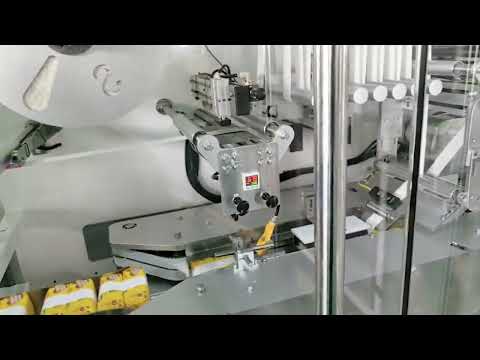
It’s the question behind every machine inquiry we get: is wet wipe manufacturing actually profitable? The short answer is yes — it’s one of the more dependable light-manufacturing margins out there — but the real answer depends on a handful of levers that you control. A well-run small line commonly sees gross margins of 25–45%, while a poorly run one can sink below break-even on the same equipment. Here’s where the money is actually made.
Start with cost per pack, not revenue
Profit in wet wipes is won at the unit level, so the only honest way to think about margin is cost per pack. Three inputs make up almost all of it: nonwoven fabric, the solution, and packaging. Fabric is usually the largest, packaging is the most variable, and solution is small per liter but quietly expensive if your line over-saturates every pack. (We break these inputs down fully in our wet wipe raw materials guide.)
Add a small allocation for labor, electricity and machine depreciation per pack, and you have your true cost. Subtract it from your selling price and you have your gross margin — the number that actually tells you whether the business works.
Gross margin vs net margin — don’t confuse them
Gross margin (selling price minus direct cost per pack) is where wet wipes look attractive: 30–45% is achievable for branded or private-label retail product. But net margin — what’s left after rent, salaries, sales costs, freight and overhead — is the number that pays you. For a small factory running at decent utilization, net margins commonly land in the 10–20% range. The gap between gross and net is mostly fixed cost, which is why utilization matters so much.
The single biggest lever: capacity utilization
This is the one most new owners underestimate. Your rent, your supervisor’s salary and your machine cost are the same whether the line runs at 30% or 90% of capacity. Spread over more packs, those fixed costs shrink per unit and your net margin climbs sharply. A line sitting idle half the week is the most common reason a “profitable” wet wipe business isn’t profitable in practice. Securing steady orders — especially private-label contracts — matters more to your bottom line than squeezing the last cent out of materials.
Where small factories make the best margins
Not all wet wipes earn equally. The thin-margin commodity end is the everyday baby wipe sold on price. The healthier margins live in:
- Private-label contracts — steady volume, predictable cash flow, no marketing spend.
- Specialty and disinfectant wipes — higher price points, stronger margins.
- Premium and eco-friendly lines — biodegradable or flushable products command a premium in the right markets.
- Single-sachet promotional wipes — low material cost per unit and often sold B2B in bulk.
Choosing what to make is itself a margin decision — our guide on which wipe type to manufacture first goes deeper on this.
A rough worked example
Suppose an 80-pack flat-pack wipe costs you around USD 0.30 in materials and another USD 0.08 in labor, power and depreciation — roughly USD 0.38 all-in. If you sell it private-label at USD 0.55, that’s a gross margin near 31%. Run that line at healthy utilization and the fixed costs spread thin, leaving a solid net margin. Run it half-empty and the same per-pack math turns into a loss after overhead. The economics are entirely about keeping the line busy.
(These figures are illustrative — plug in your own material quotes and selling prices, which will vary by market and format.)
How to protect and grow your margin
The practical playbook is consistent: control material cost without sacrificing the quality that wins repeat orders; tune your dosing so you’re not wasting solution on every pack; keep the line running through steady contracts; and move up-market toward specialty and eco products where buyers pay for value rather than the lowest price. And buy the right machine for your volume from the start — an oversized, underused line is a margin killer, which is why we walk buyers carefully through choosing the right production line.
Model your numbers before you commit
If you’re weighing whether a wet wipe line makes sense for your market, the smartest first step is building a realistic cost-per-pack and utilization model — alongside your full startup budget. Zhenbao Trade helps buyers do exactly that, then matches the machine to the plan. Get in touch and we’ll help you pressure-test the numbers before you invest.