The worst time to discover your $40,000 machine has a faulty motor? When it arrives at your facility and won’t start.
I’ve seen buyers lose weeks of production time—and thousands in repair costs—because they skipped proper pre-shipment inspection.
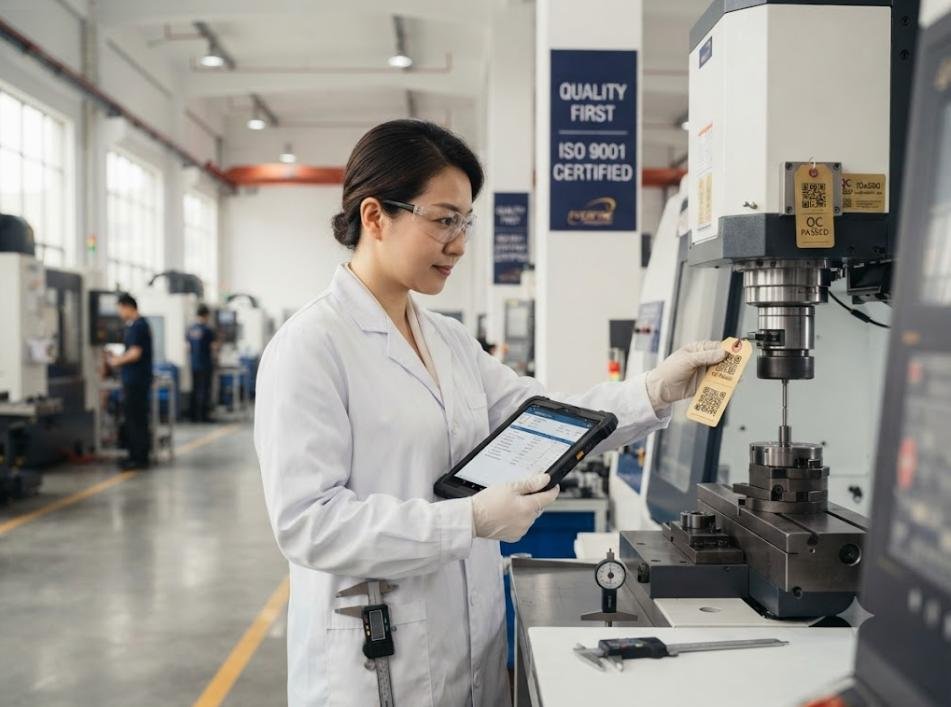
Here’s the quality control checklist we use at Zhenbao Trading before any machinery leaves the factory. It’s saved our clients from shipping defective equipment more times than I can count.
Why Pre-Shipment QC Matters More Than You Think
You might be thinking: "The supplier already tested it, right?"
Sometimes yes. Sometimes no. And sometimes “tested” just means they turned it on for 30 seconds.
The reality:
- Production machinery often sits in the factory for weeks before shipment. Components can shift, settings can change.
- Factory workers may have “adjusted” something after the official test.
- Shipping damage often happens during loading—not in transit. You need to verify condition right before crating.
A proper pre-shipment inspection catches these issues when they’re still the supplier’s problem to fix—not yours.
The 15-Point Pre-Shipment Checklist
Phase 1: Visual & Physical Inspection (Before Power-On)
- Frame and Structure
- Check for cracks, dents, or weld defects on the machine frame
- Verify all protective covers and safety guards are installed
- Confirm frame is level and stable (use a spirit level)
- Electrical Panel and Wiring
- Open the electrical cabinet—look for loose connections, exposed wires, or burn marks
- Verify voltage matches your order spec (220V, 380V, 415V, etc.)
- Check that circuit breakers and emergency stop buttons are present and accessible
- Moving Parts and Bearings
- Manually rotate any accessible shafts or rollers—they should move smoothly without grinding
- Check belt tension (too loose = slippage; too tight = bearing damage)
- Look for oil leaks around hydraulic or pneumatic components
- PLC and Control System
- Verify the PLC brand matches your order (Mitsubishi, Siemens, Omron, etc.)
- Check that the HMI (touchscreen) is the correct language
- Confirm all control buttons are labeled and functional
- Packaging Materials and Consumables
- If your machine uses packaging film, labels, or other consumables, test with actual materials (not just dummy samples)
- Verify material compatibility—especially for food-grade or medical products Phase 2: Operational Testing (Live Run)
- Power-Up Sequence
- Turn on the machine following the proper startup procedure
- Listen for unusual noises (grinding, clicking, motor strain)
- Check that all indicator lights and displays work correctly
- Speed and Production Rate
- Run the machine at target speed (e.g., 100 packs/minute for a wet wipes machine)
- Measure actual output over a 10-minute run—does it match the spec?
- Test at different speed settings if applicable
- Quality of Output
- Inspect finished products from the test run
- Check for consistent sealing, cutting, folding, or whatever your machine does
- Compare against the sample approved during negotiation
- Sensors and Safety Features
- Test emergency stop—machine should halt immediately
- Trigger safety sensors (door switches, light curtains) and verify the machine stops
- Check alarm systems for material jams or errors
- Temperature Control (If Applicable)
- For machines with heating elements (sealing bars, ovens), verify temperature accuracy with an external thermometer
- Check that temperature stabilizes and holds at the set point Phase 3: Documentation and Accessories
- Accessories and Spare Parts
- Count all included spare parts against the packing list
- Verify tools, molds, or change parts are present
- Check for user manual, wiring diagrams, and maintenance guide (in the agreed language)
- Certification Documents
- Confirm CE certificate (if ordered) matches the machine model and serial number
- Get copies of material certificates for food-contact parts if relevant
- Obtain factory test report and quality certificate
- Nameplate and Serial Number
- Verify the machine nameplate shows correct model, voltage, and production date
- Record serial number for warranty tracking Phase 4: Packaging and Shipping Readiness
- Protective Packaging
- Machine should be wrapped in moisture-proof film
- Vulnerable parts (touchscreens, glass, precision components) need extra padding
- Verify wooden crate or pallet is sturdy enough for sea freight
- Shipping Marks and Documentation
- Check that shipping marks on the crate match your order (destination port, consignee)
- Confirm gross/net weight and dimensions are recorded (you’ll need this for customs) What Happens When You Find a Problem?
This is why you do QC before shipment, not after.
If your inspector (or agent) finds an issue:
✓ Minor issues: Supplier fixes on the spot. Re-inspect before shipping.
✓ Major defects: Don’t ship. Require repair or replacement, then full re-inspection.
Planning to buy this equipment? Tell us your capacity and budget — we reply within 24 hours.
Get a factory-direct quote on WhatsApp✓ Spec mismatch: If the machine doesn’t match your PO (wrong voltage, wrong model), refuse shipment until corrected.
You have leverage before the machine is crated and loaded. Once it’s on a ship, your options are limited.
Who Should Do the Inspection?
You have three options:
- You personally: Best if you’re in China and have technical knowledge of the equipment.
- Third-party inspection company: Hire a QC firm (around $200-400 per day). Good for one-off purchases.
- Your sourcing agent: If you’re working with an agent like us, we inspect as part of the service—and we know what to look for because we’ve handled the machine type before. Our Pre-Shipment Process at Zhenbao Trading
For every machine we sell or source:
- We conduct a full 15-point inspection at the factory
- We send you a photo/video report with test run footage
- We don’t release the final payment to the supplier until you approve the QC report
- If issues are found, we negotiate the fix and re-inspect before shipping
This process has caught motor failures, incorrect voltage wiring, missing accessories, and packaging that wouldn’t survive ocean freight.
It’s the difference between receiving a machine that runs on day one—and one that sits in your facility waiting for parts from China.
Your Pre-Shipment Action Plan
Before your next machinery shipment:
- Schedule the inspection at least 3-5 days before the planned shipping date (allows time for fixes)
- Provide the inspector with your purchase order, approved samples, and technical specs
- Require a written report with photos, test data, and a pass/fail conclusion
- Don’t authorize final payment until the inspection passes
Quality control isn’t an extra cost—it’s insurance against receiving a $50,000 problem.
Need help inspecting machinery before shipment, or looking for a supplier who welcomes third-party QC?
Contact us:
Maggie (岳乙晴)
Zhenbao Trading | Machinery Sales & China Sourcing Agent
sales@zhenbaotrading.com
WhatsApp: +852 9702 5284
Related Equipment
Need a price, spec sheet or a pre-shipment factory inspection? Message us directly.
Get a factory-direct quote on WhatsAppWhatsApp: +852 9702 5284 · +86 158 7238 6392