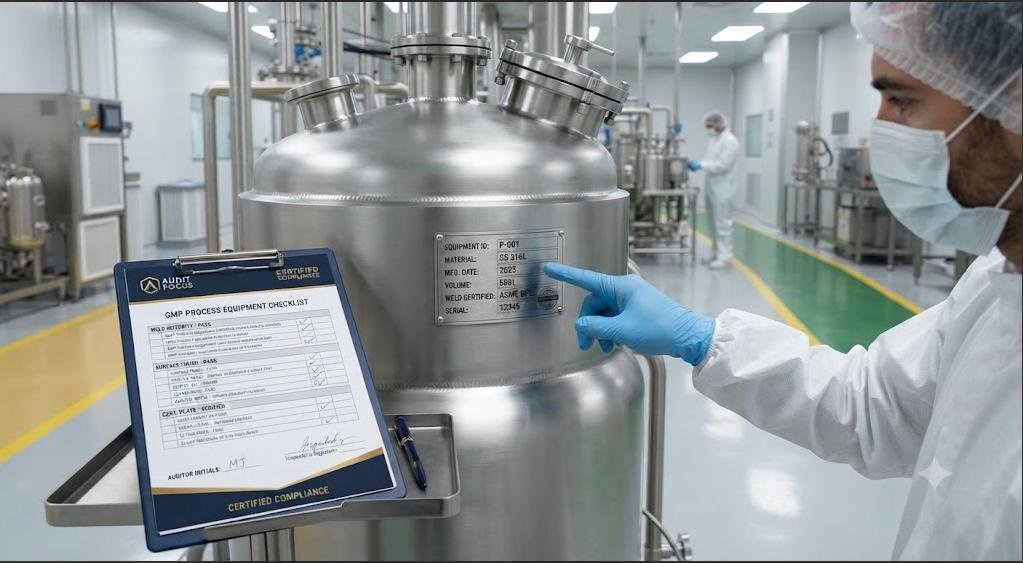
If you’re manufacturing wet wipes, personal care wipes, or cosmetic products for retail—especially if you’re supplying to chains like Walmart, Carrefour, or pharmacies—you’ll face Good Manufacturing Practice (GMP) audits sooner or later.
And here’s the problem: GMP compliance starts with your equipment. A non-compliant machine isn’t just an audit fail—it’s a business blocker. You can’t retrofit GMP-grade stainless steel after the fact, and replacing a $50k machine because it has the wrong surface finish is expensive regret.
I’ve helped manufacturers navigate equipment selection for 15 years, and I’ve seen both sides: companies that breeze through audits, and companies that discover their “bargain” machine from Alibaba won’t pass inspection. Let me save you the second scenario.
What Is GMP Compliance for Equipment?
GMP (Good Manufacturing Practice) is a regulatory framework ensuring products are consistently produced to quality standards. For machinery, GMP focuses on:
- Material safety: Equipment contact surfaces must not contaminate the product.
- Cleanability: Machines must be easy to clean, sanitize, and inspect.
- Traceability: You need documentation proving the machine meets standards.
- Validation: The equipment must perform consistently and be validated through testing.
GMP isn't one global standard—it adapts by region:
- USA: FDA CFR Part 211 (pharmaceuticals), Part 110 (food), and voluntary cosmetic GMPs
- EU: ISO 22716 (cosmetics GMP standard), plus country-specific rules
- GCC / Middle East: Gulf Cooperation Council often references ISO 22716
- ASEAN: Each country (Indonesia, Thailand, Malaysia) has local cosmetic regulations
Key point: Even if your country doesn’t legally require GMP, your buyers might. Walmart, Tesco, and major distributors often mandate GMP or equivalent as a supplier qualification.
Why Your Equipment Choice Matters
Scenario I’ve seen too often:
A Nigerian wet wipes startup orders a low-cost Chinese machine. It works fine—production runs smoothly. Two years later, they win a contract with a major retailer. The retailer sends an auditor. The auditor red-flags:
- Painted surfaces (paint can chip into product)
- Carbon steel frames (rust risk)
- Bolts and crevices that trap residue
- No equipment validation documents
Result: They need to either replace the machine or lose the contract. The $25k “savings” cost them $60k+ in lost opportunity and rushed equipment replacement.
The right move: Spec GMP-compliant equipment from Day 1—even if you’re not audited yet. You’ll get there, and retrofitting is impossible.
GMP Equipment Requirements: The Non-Negotiables
- Material Grade: Stainless Steel 304 or 316L
What auditors check:
All surfaces that touch or are near the product must be food-grade stainless steel.
- SS304: Acceptable for most wet wipes and cosmetics (dry or low-acid products)
- SS316 / 316L: Required for products with high moisture, salt, or acidity (e.g., saline wipes, certain cosmetic lotions)
What fails:
- Painted or powder-coated surfaces where product could contact
- Carbon steel frames in the product zone
- Aluminum parts (unless anodized and certified for food contact)
Why it matters:
Carbon steel rusts. Paint chips. Aluminum can leach. Auditors assume contamination risk and fail you on the spot.
What to ask your supplier:
“Which parts are SS304, and which are SS316L? Can you provide material certificates for product-contact surfaces?”
- Surface Finish: Smooth, Non-Porous, Easy to Clean
GMP requires surfaces to be smooth with no pits, crevices, or rough welds where bacteria or residue can hide.
What passes:
- Polished stainless steel: Minimum 2B finish (satin), ideally electropolished for highest grade
- Sealed welds: Continuous, smooth welds with no gaps
- Rounded corners: No 90-degree edges where product can accumulate
What fails:
- Rough, unpolished welds
- Exposed bolt threads in product zones
- Sharp corners or crevices
- Porous materials (untreated wood, unsealed plastics)
Pro tip: Ask for photos of weld seams and corner details. A good GMP machine has beautiful welds—smooth, polished, no spatter.
- Design for Cleanability: CIP-Capable or Easy Disassembly
CIP (Clean-In-Place): High-end machines allow cleaning without disassembly—spray nozzles flush all product-contact surfaces.
Non-CIP machines: Must have tool-free or quick-release disassembly so operators can clean every surface daily.
What auditors hate:
- Parts requiring wrenches to disassemble for cleaning (operators skip it = contamination risk)
- Hidden cavities, dead-end pipes, or inaccessible zones
- Lubricants that could leak into product zones
What to ask your supplier:
“How long does daily cleaning take? Can we disassemble product-contact parts without tools? Do you have a cleaning SOP (standard operating procedure)?”
If the supplier can’t answer, that’s a red flag.
- Documentation & Traceability: The Paper Trail That Saves You
When an auditor arrives, they'll ask for:
✓ Equipment manual with cleaning/maintenance SOPs
✓ Material certificates (proving SS304/316L grade)
✓ Electrical safety certification (CE, UL, or local equivalent)
✓ Installation Qualification (IQ) / Operational Qualification (OQ) documents
✓ Calibration records for sensors, scales, or other precision components
Planning to buy this equipment? Tell us your capacity and budget — we reply within 24 hours.
Get a factory-direct quote on WhatsAppIf your supplier can’t provide these, you’ll have to create them yourself—which means hiring a consultant and spending $3k–10k to validate a machine that should have come validated.
Smart move: Before you pay the balance, ask for a full document package. Legitimate GMP-oriented suppliers include this; Alibaba “bargain” sellers often don’t.
Common GMP Audit Failures (And How to Avoid Them)
Failure 1: Equipment Not Validated
What auditors want: Proof that the machine consistently produces to spec (IQ/OQ/PQ validation).
How to fix before audit: Run validation batches, document process parameters (temperature, speed, seal pressure), and record results. Hire a third-party if you lack in-house expertise.
Failure 2: Poor Zoning & Cross-Contamination Risk
What auditors want: Clear separation between raw materials, production, and finished goods. Equipment positioned to prevent contamination.
How to fix: If your machine is near an open warehouse or dusty area, enclose it or install air curtains. Mark zones with colored floor tape (raw / production / packing).
Failure 3: No Cleaning Records
What auditors want: Daily cleaning logs showing who cleaned what, when, and with which chemicals.
How to fix: Create a cleaning checklist and train your team to fill it out every shift. Auditors love paper trails.
Failure 4: Lubricants in Product Zones
What auditors want: Food-grade (H1-rated) lubricants for any moving parts near the product.
How to fix: Switch to NSF H1-certified lubricants. Check your machine manual for lubrication points and verify grades.
Buying GMP-Compliant Equipment from China: What to Check
Not all Chinese machinery is non-compliant—plenty of reputable manufacturers build GMP-grade machines. But you need to vet carefully.
Green flags:
✓ Supplier mentions “GMP,” “ISO 22716,” or “food-grade SS316L” in their product description
✓ They provide material certificates and CE documentation without you asking
✓ They’ve supplied to EU, USA, or GCC markets (higher regulatory bars)
✓ They offer IQ/OQ document templates or validation support
✓ Photos show polished welds, smooth surfaces, and cleanroom-style design
Red flags:
✗ Painted surfaces in product zones
✗ No mention of stainless steel grade
✗ Supplier says “GMP? Just tell the auditor it’s stainless steel, no problem”
✗ Bolts, screws, and rough welds visible in product-contact areas
✗ No documentation beyond a basic user manual
Pro tip: Request a video tour of a machine they’ve already delivered to a GMP-audited client. Legitimate suppliers will show you.
Cost Reality: GMP-Compliant vs Standard Machines
Expect to pay 10–25% more for a GMP-grade machine vs a “standard” version.
Example:
- Standard wet wipes machine: $35,000–45,000
- GMP-grade version (SS316L, electropolished, CIP-capable, full docs): $42,000–55,000
Is it worth it? Yes—if you plan to supply to regulated markets or major retailers. That $7k–10k premium is cheaper than:
- Failing an audit and losing a $200k/year contract
- Replacing the machine later ($35k+ wasted)
- Consultant fees to retrofit validation ($5k–15k) Your GMP Equipment Checklist (Use This Before You Buy)
Before you sign a purchase order, confirm:
- [ ] All product-contact surfaces are SS304 or SS316L (ask for material certs)
- [ ] Welds are smooth and sealed (request close-up photos)
- [ ] No painted surfaces in product zones
- [ ] Equipment can be cleaned daily without tools (or has CIP system)
- [ ] Supplier provides: manual, material certificates, electrical certs, IQ/OQ templates
- [ ] Lubricants (if any) are NSF H1 food-grade
- [ ] Machine design has no dead-end cavities or hidden crevices
- [ ] Supplier has supplied to GMP-audited clients before (ask for references) Bottom Line
GMP compliance isn’t optional if you want to scale your wet wipes or cosmetic business. And GMP starts with your equipment.
Don’t wait until an auditor fails you. Spec GMP-grade machines from Day 1, even if it costs 10–20% more. That premium is insurance against lost contracts, wasted equipment, and expensive retrofits.
Need help sourcing GMP-compliant wet wipes or cosmetic machinery from China? We vet suppliers for material grades, cleanability, and documentation—so you don’t have to guess. Email us: sales@zhenbaotrading.com
Related Equipment
Need a price, spec sheet or a pre-shipment factory inspection? Message us directly.
Get a factory-direct quote on WhatsAppWhatsApp: +852 9702 5284 · +86 158 7238 6392