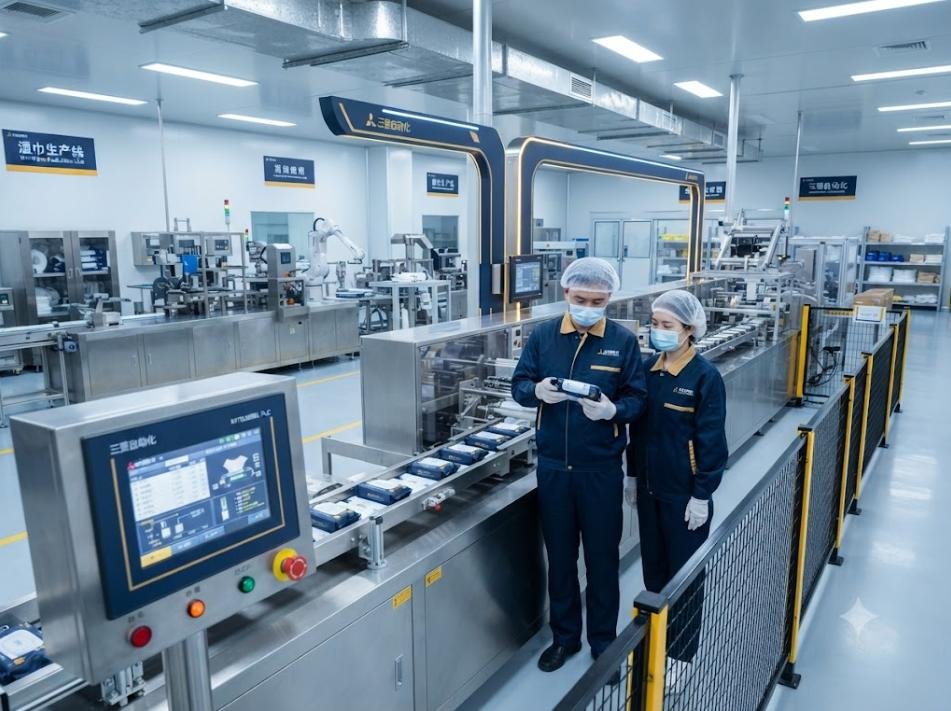
I’ve worked on the supply side of China’s machinery export industry for five years. In that time, I’ve watched dozens of buyers place orders for wet wipes machines—and I’ve seen the same five mistakes show up again and again.
Some of these mistakes cost a few thousand dollars. Others delay production launches by months. A few have killed entire business plans.
The frustrating part? Most of these problems are completely avoidable if you know what to look for before you sign the purchase order.
Here are the five mistakes I see most often—and what you should do instead.
Mistake 1: Choosing a supplier based only on the lowest price
This is the most common mistake, and it’s the one that causes the most damage.
A buyer gets three quotes: $140,000, $160,000, and $95,000. The $95,000 quote looks identical on paper—same capacity, same PLC, same certifications listed. So they go with the cheapest option.
Three months later, the machine arrives. The “Mitsubishi PLC” is a counterfeit. The sealing mechanism jams every 20 minutes. The CE certificate was fabricated. And the factory has stopped answering emails.
What to do instead: Get at least three quotes, but don’t choose based on price alone. Ask for references from buyers in your region. Request videos of the exact machine model running at the factory. And if one quote is 30% cheaper than the others with no clear reason, treat it as a red flag, not a bargain.
Mistake 2: Skipping the factory audit
Many buyers assume that if a factory has certifications and a nice website, they’re legitimate. But certifications can be faked, and websites can be copied.
I’ve personally visited factories that looked impressive online but turned out to be trading companies with no manufacturing capability. In one case, a “factory” was just a showroom with rented machines.
What to do instead: Either visit the factory yourself, or hire a third-party inspection company to do a pre-order audit. At minimum, verify that:
- The factory actually manufactures the machines (not just resells them)
- They have the equipment and workers to fulfill your order
- Their quality control process is documented and followed
- Previous customers can confirm successful deliveries
If a factory resists an audit, that’s a red flag.
Mistake 3: Ignoring lead time buffers
A factory quotes you “60 days delivery.” You plan your production launch for day 65.
Planning to buy this equipment? Tell us your capacity and budget — we reply within 24 hours.
Get a factory-direct quote on WhatsAppThen reality hits: a component supplier is delayed by two weeks. Shipping takes longer than expected. Customs holds the cargo for inspection. Suddenly your 60-day delivery becomes 95 days, and your entire launch timeline collapses.
What to do instead: Always add a buffer. If the factory says 60 days, plan for 90. If your business absolutely cannot tolerate delays, negotiate a penalty clause in the contract—but be prepared to pay a higher price for that guarantee.
And during production, ask for weekly photo or video updates. Don’t wait until the shipping date to discover there’s a problem.
Mistake 4: Not defining "acceptance" criteria before ordering
Here’s a scenario I’ve seen multiple times: A buyer orders a machine rated for “100 packs per minute.” The machine arrives and runs at 95 packs per minute. The buyer says it’s defective. The factory says it’s within tolerance. Both sides are angry, and there’s no clear contract language to resolve the dispute.
This happens because the purchase order didn't specify:
- Acceptable performance range (e.g., 95-105 ppm is acceptable)
- How performance will be tested (FAT vs. SAT, what products, what conditions)
- What happens if the machine doesn’t meet the standard
What to do instead: Before you place the order, agree in writing on:
- Exact technical specifications and acceptable ranges
- FAT (Factory Acceptance Test) procedures and pass/fail criteria
- SAT (Site Acceptance Test) procedures if applicable
- Warranty terms and what counts as a defect
The clearer your acceptance criteria, the less room there is for disputes later.
Mistake 5: Underestimating spare parts and consumables
A buyer orders a $150,000 wet wipes machine. It arrives and runs beautifully. Then, six months later, a sealing blade wears out. The buyer contacts the factory and learns that the replacement part costs $800 and takes 30 days to ship from China.
Production stops for a month. The buyer loses orders. And they realize too late that they should have ordered spare parts with the original machine.
What to do instead: Before the machine ships, ask the factory for:
- A recommended spare parts list for the first year
- Lead times and costs for each part
- Whether any parts are proprietary or can be sourced locally
Order critical spare parts with the original machine. Yes, it increases your upfront cost—but it’s far cheaper than halting production while you wait for a $200 part to arrive from China.
The pattern behind all five mistakes
Every mistake on this list comes down to the same thing: assuming the transaction will go smoothly and not planning for problems.
But in cross-border machinery purchases, problems are normal. Miscommunication happens. Delays happen. Quality issues happen.
The buyers who succeed aren’t the ones who avoid problems entirely—they’re the ones who plan for problems in advance, verify everything, and build buffers into their timelines and budgets.
How we help buyers avoid these mistakes
At Zhenbao Trading, we work with buyers who want to source machinery from China without learning these lessons the hard way.
We handle:
- Factory vetting and audits (we visit the facilities in person)
- Quality inspections during production
- Performance testing before shipment
- Documentation and logistics coordination
We’ve worked with manufacturers in Russia, Tajikistan, and across Southeast Asia and the Middle East. Our job is to be your eyes and hands in China—so you can focus on running your business instead of troubleshooting factory problems from 5,000 miles away.
If you’re planning to source a wet wipes machine (or any production equipment) from China, let’s talk about how to do it right.
Contact: sales@zhenbaotrading.com | WhatsApp: +852 9702 5284
Related Equipment
Need a price, spec sheet or a pre-shipment factory inspection? Message us directly.
Get a factory-direct quote on WhatsAppWhatsApp: +852 9702 5284 · +86 158 7238 6392