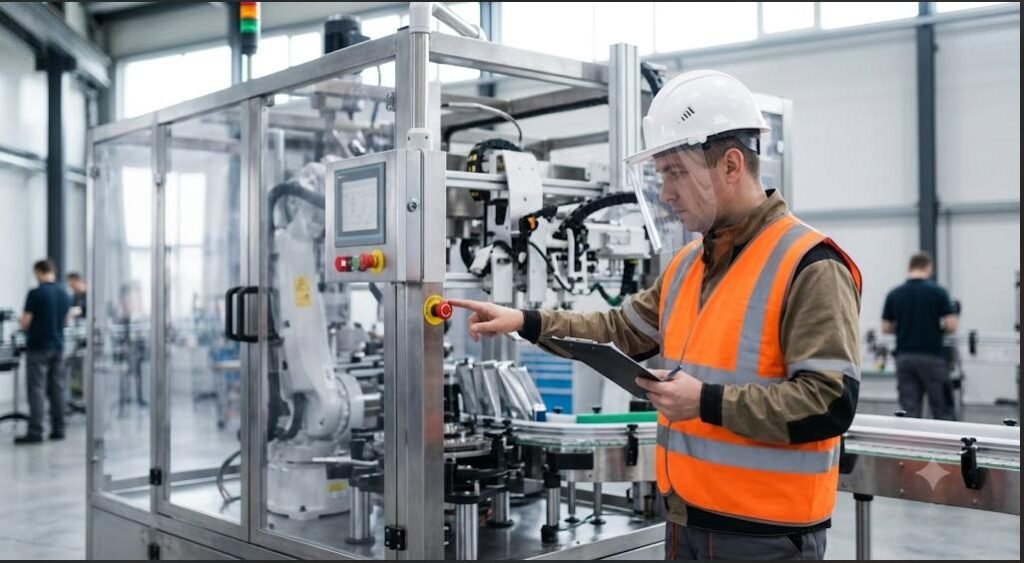
Your machinery has arrived from China. Customs cleared it. It’s now sitting in your factory.
But are you legally allowed to operate it?
In many countries, clearing customs is not the end of the compliance process. Some jurisdictions require you to register imported machinery with local authorities before you can legally put it into operation—especially for industrial equipment that poses safety, environmental, or labor risks.
Miss this step, and you could face:
- Fines or penalties from local labor, safety, or environmental inspectors
- Shutdown orders (machine banned from operation until registered)
- Liability issues if the machine causes injury and wasn’t properly registered
- Invalidated insurance claims
This guide explains which countries require machinery registration, what the process looks like, what documents you’ll need, and how to stay compliant from the moment your machine arrives.
Does Your Country Require Machinery Registration?
Not all countries require formal registration of imported machinery with local authorities. Requirements vary widely depending on:
- Type of machinery (high-risk equipment like pressure vessels, lifting gear, or boilers almost always need registration)
- Country/region regulations (EU countries, Middle East, Latin America, and parts of Asia have stricter requirements)
- Industry sector (food processing, pharmaceuticals, and hazardous environments often face extra scrutiny)
Here's a regional overview:
European Union
Most EU countries do not require central “machinery registration” in the traditional sense—but they do require:
- CE Marking Compliance – The machine must have valid CE certification (see our guide on CE certification)
- Employer’s Machinery Register – Employers must maintain an internal register of all machinery, including:
- Machine type, model, serial number
- Date of installation
- Maintenance records
- Safety inspection logs
- Periodic Safety Inspections – Certain machinery (pressure equipment, lifting gear, industrial ovens) must undergo regular inspections by authorized bodies
- Declaration of Conformity – Must be kept on file and available for labor inspectors
Local variations:
- Germany: Employers must notify the Berufsgenossenschaft (trade association) for certain high-risk machinery
- France: DREAL (regional environmental/industrial authority) inspects and registers some industrial equipment
- Spain, Italy, Portugal: Local labor authorities may require notification of new machinery installations
Bottom line for EU: No central “registration,” but detailed internal records + CE compliance + periodic inspections are mandatory.
United Kingdom (Post-Brexit)
Similar to the EU, but now uses UKCA marking instead of CE (though CE is still temporarily accepted for some equipment).
Requirements:
- UKCA or CE compliance
- Employer’s machinery register (internal record-keeping)
- Periodic inspections for pressure systems, lifting equipment, etc. (LOLER, PUWER regulations)
No formal “registration” with a central authority for most machinery—but HSE (Health and Safety Executive) can inspect and demand compliance documentation at any time.
United States
The U.S. does not have a federal machinery registration system.
However:
- OSHA (Occupational Safety and Health Administration) requires employers to ensure machinery meets safety standards
- State-level regulations vary (California, New York, and others have stricter rules)
- Pressure vessels and boilers must be registered with the National Board of Boiler and Pressure Vessel Inspectors and inspected by authorized agencies
For most industrial machinery: No registration required, but you must comply with OSHA standards and maintain safety records.
Middle East (UAE, Saudi Arabia, Qatar, Kuwait, Oman)
Registration is often required, especially for industrial and construction equipment.
UAE (Dubai, Abu Dhabi):
- Imported machinery may need approval from Dubai Municipality, Abu Dhabi Department of Economic Development (ADDED), or relevant free zone authority
- High-risk machinery (cranes, elevators, boilers) must be inspected and registered before operation
- Annual re-inspection and renewal required
Saudi Arabia:
- SASO (Saudi Standards, Metrology and Quality Organization) regulates imported machinery
- Certain equipment requires SASO certification and registration with the Ministry of Commerce
- Labor inspectors can demand registration proof during audits
Qatar, Kuwait, Oman:
- Similar requirements—high-risk equipment must be inspected and registered with local authorities (Ministry of Labor, Civil Defense, etc.)
Documents typically required:
- Import customs clearance certificate
- Conformity certificate (GCC, SASO, or equivalent)
- Technical specifications and user manual (often in Arabic)
- Safety inspection report (from approved inspector)
Latin America (Mexico, Brazil, Argentina, Chile, Colombia)
Mexico:
- No universal machinery registration, but STPS (Secretariat of Labor and Social Welfare) conducts safety inspections
- High-risk machinery (pressure vessels, industrial boilers, forklifts) may require NOM certification and registration with local labor authorities
Brazil:
- NR-12 (Regulatory Norm 12) governs machinery safety
- Employers must maintain detailed machinery records and conduct regular safety inspections
- Some machinery must be registered with regional labor offices (DRT)
Argentina, Chile, Colombia:
- Requirements vary by province/region
- High-risk machinery typically requires registration with labor or industrial safety authorities
Africa (South Africa, Kenya, Nigeria, Egypt)
South Africa:
- Department of Employment and Labour requires registration of certain machinery (pressure equipment, cranes, hoists)
- Certificate of Registration issued after inspection by an approved inspection authority
Kenya:
- Directorate of Occupational Safety and Health Services (DOSHS) requires notification and inspection of industrial machinery
- Registration certificate issued after compliance verification
Nigeria:
- Federal Ministry of Labour and Employment oversees workplace safety
- High-risk machinery must be registered and inspected
Egypt:
- Ministry of Manpower and Immigration requires registration of industrial equipment
- Import permits and local safety inspections often needed
Asia-Pacific (China, India, Thailand, Vietnam, Philippines)
China:
- Imported machinery used in production must comply with GB (Chinese national standards)
- Some equipment requires CCC certification (China Compulsory Certification)
- Local Market Supervision Administration may require registration and inspection
India:
- Factories Act requires registration of certain machinery with State Factory Inspectorate
- Pressure vessels, lifts, and hoists must be inspected and certified
Thailand:
- Department of Labour Protection and Welfare requires notification and inspection of high-risk machinery
- Registration certificate issued after compliance check
Vietnam:
- Ministry of Labour, Invalids, and Social Affairs (MOLISA) regulates workplace safety
- Certain machinery must be inspected and registered before operation
Philippines:
- DOLE (Department of Labor and Employment) requires registration and inspection of high-risk machinery
Which Types of Machinery Almost Always Require Registration?
Even in countries without broad machinery registration requirements, certain high-risk equipment categories typically need official registration and periodic inspection:
- Pressure Vessels and Boilers
- Steam boilers, pressure cookers, autoclaves
- Must be inspected and registered (almost everywhere globally)
- Annual or periodic re-inspection required
- Lifting Equipment
- Cranes, hoists, forklifts, elevators, lifts
- Registration and periodic load testing required
- Operator certification often needed as well
- Industrial Ovens and Furnaces
- High-temperature processing equipment
- Fire safety and environmental compliance checks
- Machinery in Hazardous Environments
- Equipment used in explosive atmospheres (ATEX zones)
- Chemical processing machinery
- Must meet strict safety and environmental standards
- Food Processing and Pharmaceutical Equipment
- Subject to health authority inspections (FDA in US, EFSA in EU, etc.)
- Registration with food safety or pharmaceutical regulators often required
If your machinery falls into any of these categories, assume registration is required—and verify with local authorities before installation.
Planning to buy this equipment? Tell us your capacity and budget — we reply within 24 hours.
Get a factory-direct quote on WhatsAppGeneral Registration Process (Step-by-Step)
While specific procedures vary by country, the typical registration process for imported machinery follows this pattern:
Step 1: Verify Registration Requirements
Before the machine arrives:
- Contact your local labor department, industrial safety authority, or chamber of commerce
- Ask: “Do I need to register this type of machinery before operating it?”
- Request a checklist of required documents and procedures
Who to contact:
- Labor/employment ministry (workplace safety regulations)
- Environmental protection agency (if the machine has emissions or waste)
- Health authority (for food/pharma equipment)
- Local municipality or economic development office (for business permits)
Step 2: Prepare Required Documents
Commonly required documents:
- Import Customs Clearance Certificate
- Proves the machine legally entered the country
- Conformity Certificate (CE, EAC, SASO, NOM, etc.)
- Proves the machine meets safety and technical standards
- Technical Specifications and User Manual
- Often must be in the local language (e.g., Arabic in Middle East, Portuguese in Brazil)
- Includes electrical diagrams, safety instructions, maintenance procedures
- Declaration of Conformity (from manufacturer)
- States the machine complies with relevant safety standards
- Safety Inspection Report (if required)
- Pre-installation inspection by an authorized inspector
- Verifies the machine’s safety features function correctly
- Installation Certificate (for high-risk equipment)
- Issued by qualified technician after installation
- Confirms proper setup, grounding, guards, emergency stops, etc.
- Employer’s Risk Assessment
- Document identifying hazards associated with the machine
- Describes safety measures and operator training plan
- Proof of Insurance (sometimes required)
- Liability insurance covering machinery operation
Step 3: Submit Registration Application
Where to submit:
- Local labor department / occupational safety office
- Industry-specific regulator (e.g., pressure vessel authority, food safety agency)
- Online portal (some countries have digital registration systems)
Application typically includes:
- Completed registration form
- All supporting documents listed above
- Registration fee (varies widely—$50 to $2,000+ depending on country and machine type)
Processing time: 1 day to 4 weeks, depending on the country and whether an inspection is required.
Step 4: Schedule Pre-Operation Inspection (If Required)
For high-risk machinery, authorities may send an inspector to your facility to:
- Verify the machine matches the documentation
- Check installation (electrical connections, grounding, guards, emergency stops)
- Test safety features (emergency stop response, overload protection, interlocks)
- Review operator training records
If the machine passes inspection:
- Inspector issues a Certificate of Compliance or Registration Certificate
- You’re legally cleared to operate the machine
If the machine fails:
- Issues must be corrected before re-inspection
- Operation is not permitted until compliance is achieved
Step 5: Display Registration Certificate / Keep Records
Once registered:
- Display the registration certificate near the machine (if required by local rules)
- Keep all compliance documents on file for at least 5-10 years (exact period varies by country)
- Maintain a machinery logbook recording:
- Installation date
- Maintenance performed
- Inspections and safety checks
- Any incidents or malfunctions
Labor inspectors can request these records at any time.
Step 6: Schedule Periodic Re-Inspections (If Required)
Many countries require annual or biennial re-inspection for high-risk machinery.
Common re-inspection intervals:
- Pressure vessels / boilers: Annually
- Cranes / hoists: Annually or every 2 years
- Industrial machinery in hazardous zones: Every 1-3 years
Mark your calendar and schedule inspections before the deadline—operating with an expired registration can result in fines or shutdown orders.
What Happens If You Don’t Register?
Possible consequences of operating unregistered machinery:
- Fines and Penalties
- Labor or safety authorities can issue fines (ranging from hundreds to tens of thousands of dollars, depending on severity and country)
- Shutdown Orders
- Inspectors can order immediate cessation of machine operation until registration is complete
- Production downtime can be costly
- Liability Issues
- If an employee is injured by unregistered machinery, you may face:
- Criminal charges (in some jurisdictions)
- Civil lawsuits with no insurance coverage (insurers may deny claims for non-compliant equipment)
- Increased penalties in court
- Business License Revocation
- Severe or repeated violations can result in suspension or revocation of your business operating license
- Import/Export Restrictions
- Future imports may be blocked or subject to heightened scrutiny
Bottom line: Registration isn’t optional if your country/region requires it. The cost and hassle of registration are far less than the consequences of non-compliance.
Tips for Smooth Machinery Registration
- Research Requirements Early
Don’t wait until the machine arrives. Research registration requirements during the purchasing phase so you can:
- Request the right documents from your Chinese supplier (user manuals in local language, conformity certificates, technical drawings)
- Budget for inspection and registration fees
- Plan installation timeline around inspection schedules
- Work with a Local Customs Broker or Compliance Consultant
If registration requirements are complex, hire a local expert who:
- Knows the exact forms and procedures
- Has relationships with inspection authorities (can speed up the process)
- Ensures you don’t miss any steps
Cost: $300-$2,000 depending on complexity.
Value: Avoids delays, fines, and compliance mistakes.
- Ensure Your Supplier Provides All Necessary Documents
Before you pay the balance, confirm the supplier will provide:
- User manual in your country’s language (or at least English, which you can translate)
- Conformity certificate (CE, EAC, SASO, etc.)
- Electrical drawings and technical specifications
- Declaration of Conformity
- Test reports for safety features
If the supplier says “we’ll send it later,” get it in writing and hold back part of the payment until you receive everything.
- Schedule Installation by Qualified Technicians
For high-risk machinery, authorities may require that installation is done by certified technicians who can issue an installation certificate.
Ask your supplier:
- “Do you provide installation support?”
- “Can you recommend a certified local installer?”
- “Will you issue an installation certificate?”
- Maintain Detailed Records
From day one, keep a machinery compliance file containing:
- Import clearance documents
- Conformity certificates
- Registration certificate
- Inspection reports
- Maintenance logs
- Operator training records
If an inspector ever shows up, you can hand them the file and demonstrate full compliance immediately.
Case Study: Registering a Wet Wipes Machine in Saudi Arabia
Let’s walk through a real-world example to see how the process works.
Scenario:
A Saudi Arabian hygiene products company imports an automatic wet wipes packaging machine from China (CIF value: $60,000 USD).
Registration Process:
Step 1: Pre-Purchase Research
- The buyer contacts SASO (Saudi Standards, Metrology and Quality Organization) and learns that imported machinery requires:
- SASO conformity certificate (or GCC equivalent)
- Registration with the Ministry of Commerce
- Pre-operation inspection by an authorized body Step 2: Supplier Documentation
- The buyer ensures the Chinese supplier provides:
- User manual in English (to be translated to Arabic)
- CE certificate (accepted as conformity proof under GCC mutual recognition)
- Technical specifications and electrical drawings
- Declaration of Conformity Step 3: Customs Clearance
- Machine clears Saudi customs with SASO conformity certificate and import permit Step 4: Registration Application
- Buyer submits registration application to local Chamber of Commerce and Ministry of Commerce, including:
- Import customs clearance certificate
- SASO conformity certificate
- Technical manual (Arabic translation)
- Installation plan and risk assessment
- Registration fee: SAR 2,000 (~$530 USD) Step 5: Pre-Operation Inspection
- An inspector from an authorized Saudi inspection body visits the factory
- Inspects machine installation: electrical grounding, emergency stop, safety guards
- Tests machine operation and safety features
- Issues Certificate of Compliance Step 6: Legal Operation
- Buyer displays certificate near machine
- Maintains compliance file with all documents
- Schedules annual re-inspection (required for industrial machinery in Saudi Arabia)
Total time from arrival to legal operation: 3 weeks
Total cost (registration + inspection + translation): ~$1,200 USD
FAQ: Machinery Registration
Q: Do I need to register every single machine, or just high-risk ones?
A: Depends on your country. Some countries require registration of all industrial machinery; others only high-risk equipment (pressure vessels, lifts, hazardous-zone machinery). Check with local authorities.
Q: Can I start using the machine while the registration is being processed?
A: Generally, no. Most jurisdictions require registration (and inspection, if applicable) to be completed before operation begins. Operating an unregistered machine can result in fines and shutdown orders.
Q: What if my supplier didn’t provide the required documents?
A: Contact the supplier immediately and request them. If they can’t provide them, you may need to:
- Hire a local engineer to create technical documentation based on the actual machine
- Commission third-party testing to generate safety reports
- In worst case, the machine may not be registerable—emphasizing why you should clarify documentation requirements before purchasing.
Q: Does registration cover modifications or upgrades to the machine?
A: Usually no. If you modify the machine (add attachments, change electrical systems, alter safety features), you may need to re-register or notify authorities of the change. Check local rules.
Q: How long is a registration certificate valid?
A: Varies:
- Some countries: Valid indefinitely (as long as the machine is in use and maintained)
- Others: Must be renewed annually or biennially, often requiring re-inspection
Check your registration certificate for expiration date and renewal requirements.
Final Checklist: Registering Imported Machinery
- [ ] Research local registration requirements before the machine arrives
- [ ] Identify which authority handles registration (labor dept, safety office, industry regulator)
- [ ] Confirm required documents and translate if necessary
- [ ] Collect all documentation from supplier (manual, certificates, technical specs, DoC)
- [ ] Submit registration application with required documents and fee
- [ ] Schedule pre-operation inspection (if required)
- [ ] Correct any issues identified during inspection
- [ ] Receive registration certificate / certificate of compliance
- [ ] Display certificate (if required) and keep compliance file updated
- [ ] Schedule periodic re-inspections (if required)
Final Takeaway
Clearing customs is not the end of compliance—it’s just the beginning.
In many countries, you must register imported machinery with local authorities before you can legally operate it. The process varies by region and equipment type, but the principle is the same: authorities want to ensure the machine is safe, compliant, and properly installed.
To stay compliant:
- Research registration requirements early (before you buy)
- Get the right documents from your supplier upfront
- Submit registration and schedule inspection promptly
- Keep detailed records for future inspections
- Stay on top of renewal and re-inspection deadlines
Do this right, and your machine operates legally from day one. Skip it, and you risk fines, shutdowns, and liability issues you don’t want to face.
Need help ensuring your imported machinery meets local compliance requirements?
Zhenbao Trade works with buyers worldwide to source machinery and coordinate all necessary documentation for smooth registration in your country. We ensure your supplier provides everything you need—before the machine ships. Contact us for compliant machinery sourcing.
Related Equipment
Need a price, spec sheet or a pre-shipment factory inspection? Message us directly.
Get a factory-direct quote on WhatsAppWhatsApp: +852 9702 5284 · +86 158 7238 6392