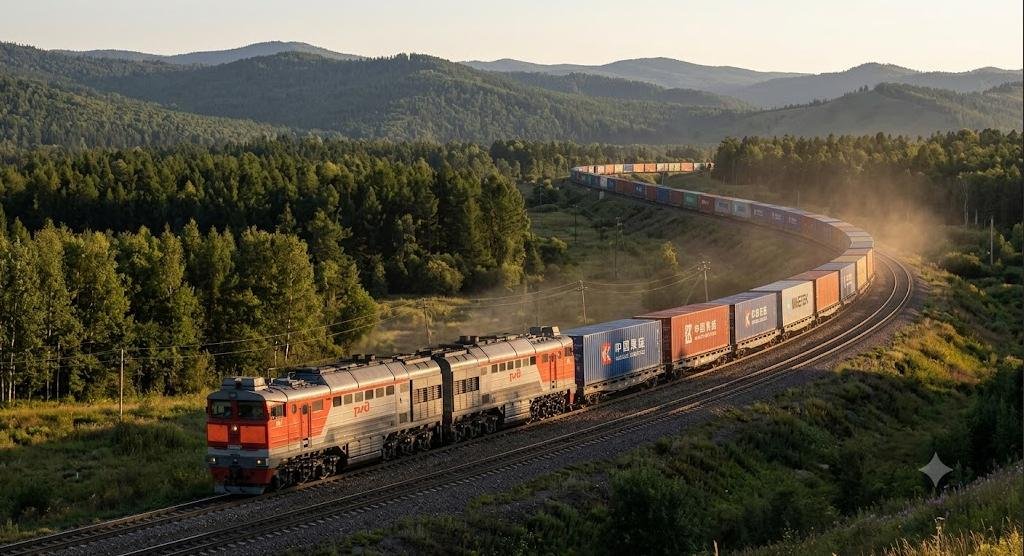
Russia is one of the world’s fastest-growing markets for Chinese industrial machinery—particularly since 2022, when Western suppliers pulled back and Russian manufacturers began looking east for equipment, spare parts, and production lines.
But importing machinery into Russia isn’t as straightforward as shipping to Europe or North America. The regulatory environment, certification requirements, payment systems, and logistics all have unique challenges that can trip up first-time importers.
The good news? Once you understand the process, importing machinery from China to Russia is manageable—and the market opportunity is significant.
This guide covers everything you need to know: certifications (EAC), customs clearance, payment methods, sanctions compliance, logistics, and how to work with Chinese suppliers who understand the Russian market.
Why Russia Is a Growing Market for Chinese Machinery
Since 2022, Russian imports of Chinese machinery have surged across multiple sectors:
- Food and beverage processing equipment
- Packaging machinery (especially for domestic production replacing imports)
- Construction and mining equipment
- CNC machines and metalworking equipment
- Hygiene and textile production lines
Key drivers:
- Import substitution policy – Russia prioritizes local production and sourcing from “friendly” nations (China, Turkey, India)
- Western sanctions – European and American machinery suppliers largely exited the market
- Competitive pricing – Chinese equipment offers strong value compared to European alternatives
- Established trade routes – Rail, sea, and road connections between China and Russia are well-developed
For Chinese suppliers, Russia is now a top-5 export destination. For Russian buyers, China is often the only viable source for certain machinery types.
Certification Requirement 1: EAC (Eurasian Conformity)
The most important certification for machinery entering Russia is EAC (formerly CU-TR), which stands for Eurasian Conformity.
What is EAC?
EAC certification is required for products sold in the Eurasian Economic Union (EAEU), which includes:
- Russia
- Belarus
- Kazakhstan
- Armenia
- Kyrgyzstan
It’s the EAEU equivalent of CE marking in the EU.
Which Machinery Needs EAC Certification?
Most industrial machinery requires EAC under one or more Technical Regulations (TR), including:
- TR CU 010/2011 – Safety of machinery and equipment
- TR CU 004/2011 – Low voltage equipment (electrical safety)
- TR CU 020/2011 – Electromagnetic compatibility (EMC)
- TR EAEU 037/2016 – Restricted use of hazardous substances (RoHS equivalent)
Common machinery types that need EAC:
- Production lines (food, packaging, hygiene)
- CNC and metalworking equipment
- Lifting and material handling machinery
- Electrical and electronic machinery
- Processing and automation equipment
Exceptions (may not need EAC):
- Machinery for export processing (not used in Russia)
- Equipment for exhibitions or testing (temporary import)
- Custom-built machinery for a single buyer’s exclusive use (case-by-case)
When in doubt, assume your machine needs EAC.
How to Obtain EAC Certification
Unlike CE (which is self-declared), EAC must be issued by an accredited certification body in the EAEU.
Two types of EAC documents:
- EAC Declaration of Conformity (for lower-risk machinery)
- Issued by the manufacturer or importer
- Requires testing and technical documentation
- Valid for 1-5 years
- EAC Certificate of Conformity (for higher-risk machinery)
- Issued by an accredited EAEU certification body after testing
- More rigorous testing and factory audit may be required
- Valid for 1-5 years (or single batch)
How Chinese Suppliers Can Get EAC
Option 1: Supplier Obtains EAC Before Shipment
Some Chinese manufacturers already have EAC certification for their standard models (especially those selling regularly to Russia).
Ask your supplier:
- “Do you have EAC certification for this model?”
- “Can you provide a copy of the EAC certificate or declaration?”
- “Is it still valid, and does it cover Russia?”
Pros: Simplest for the buyer—machine arrives certified.
Cons: Not all Chinese suppliers have EAC, and obtaining it from China can take 2-4 months.
Option 2: Buyer Obtains EAC Upon Import (Importer's Declaration)
If the supplier doesn’t have EAC, the Russian buyer (or their customs broker/certification agent) can obtain it upon import.
Process:
- Buyer contracts with a Russian EAC certification body
- Supplier provides technical documentation (specs, drawings, manuals, test reports)
- Certification body reviews documents and may request sample testing
- EAC Declaration or Certificate is issued in the buyer’s name
- Buyer can now clear customs and sell/use the equipment in Russia
Cost: $500 – $5,000 USD depending on machinery complexity and testing requirements.
Time: 2-8 weeks if documentation is complete.
Option 3: Single-Batch EAC Certificate
For one-time imports or unique machinery, you can apply for a single-batch EAC certificate that covers only this specific shipment.
Pros: Faster and cheaper than full EAC.
Cons: Only valid for this one import; can’t resell or import more without repeating the process.
What Happens If You Import Without EAC?
At customs:
- Shipment will be held
- You’ll be required to obtain EAC before clearance
- Storage fees accumulate daily while the machine sits at customs
After import:
- Rosstandart (Russian standards authority) can inspect and fine you for non-certified equipment
- Equipment may be seized or banned from operation
- If the machinery causes injury and lacks certification, you face legal liability
Bottom line: Don’t ship machinery to Russia without confirming EAC compliance first.
Customs Clearance: What You Need to Prepare
Russian customs clearance for machinery requires detailed documentation and can take 3-10 days (longer if issues arise).
Required documents:
- Commercial Invoice (from supplier)
- Must show accurate machine value, model, specifications
- Currency (USD, CNY, or RUB)
- Packing List (from supplier)
- Detailed list of all items, weights, dimensions
- Bill of Lading or Airway Bill (from freight forwarder)
- EAC Certificate or Declaration
- Must be valid and match the machinery description
- Technical Passport / User Manual
- In Russian language (or translated)
- Includes specifications, safety info, operation instructions
- Contract Between Buyer and Supplier
- Proves the commercial terms and legitimacy of the transaction
- Certificate of Origin (if applicable)
- Proves the machinery is made in China (may reduce duties under certain agreements)
- Import License (if applicable for restricted goods)
Customs Duties and VAT
Import duties on machinery into Russia:
- Standard duty rate: 0% – 15% depending on HS code (most machinery falls in 5-10% range)
- VAT: 20% on the customs value (CIF price + duties)
- Excise taxes: Usually not applicable for machinery
Example calculation:
Let's say you import a $50,000 USD packaging machine (CIF Moscow):
- CIF value: $50,000
- Customs duty (10%): $5,000
- Customs value for VAT: $55,000
- VAT (20%): $11,000
- Total customs cost: $16,000
Your landed cost = $50,000 + $16,000 = $66,000 USD
How to Classify Your Machinery (HS Codes)
Every product imported into Russia must be declared under the correct HS code (Harmonized System code), which determines the duty rate.
HS codes are 10 digits in Russia (first 6 digits are international, last 4 are EAEU-specific).
Example HS codes for machinery:
- 8422.30 – Packaging machinery (filling, closing, sealing)
- 8451.80 – Textile machinery (wet wipes, non-woven equipment)
- 8456-8463 – CNC and metalworking machines
- 8428 – Lifting and handling machinery
How to find the right HS code:
- Ask your supplier (they should know from past Russian exports)
- Consult with your Russian customs broker
- Use the EAEU Customs Union’s HS code database
Getting the HS code wrong can result in:
- Higher duties
- Customs delays
- Fines for misclassification
Always confirm the HS code with your customs broker before shipment.
Payment Challenges: How to Pay Chinese Suppliers from Russia
This is one of the biggest challenges for Russian buyers post-2022, as most Russian banks were cut off from SWIFT and major international payment networks.
Standard payment methods (pre-2022) that are now restricted or unavailable:
- SWIFT transfers from major Russian banks to Chinese banks
- USD/EUR-denominated transactions through Western banks
- Visa, Mastercard, PayPal, Stripe (for online payments)
Alternative Payment Methods for Russia-China Trade (2024-2026)
- RMB (Yuan) Direct Payments
Many Russian and Chinese banks now support direct RMB transfers bypassing SWIFT.
How it works:
- Russian buyer opens an RMB account at a sanctioned-friendly Russian bank (e.g., Gazprombank, Sberbank China subsidiaries)
- Payment is sent in RMB directly to the Chinese supplier’s bank
- No USD or EUR involved, reducing sanctions risk
Pros: Growing acceptance, avoids USD sanctions.
Cons: Exchange rate risk, limited bank options.
- Cryptocurrency (Stablecoins)
Some Russian-Chinese B2B transactions now use USDT (Tether) or other stablecoins for cross-border payments.
How it works:
- Buyer converts RUB to USDT via a crypto exchange
- Sends USDT to supplier’s wallet address
- Supplier converts USDT to CNY in China
Pros: Fast, relatively low fees, avoids traditional banking.
Cons: Regulatory gray area, volatility risk (even with stablecoins), not all suppliers accept crypto.
- Third-Country Intermediary Banks
Payments routed through banks in Turkey, UAE, Kazakhstan, Hong Kong, or other neutral jurisdictions.
How it works:
- Russian buyer sends RUB to a Turkish or UAE bank account (often a trading company’s account)
- That intermediary converts to USD/CNY and forwards to the Chinese supplier
- Supplier receives payment through a non-sanctioned bank
Pros: Works for larger transactions, avoids direct sanctioned-bank involvement.
Cons: Higher fees (intermediary takes a cut), slower, requires trusted intermediary.
- Goods-for-Goods (Barter) or Offset Deals
Some Russian companies offer barter or offset arrangements:
- Russian buyer provides raw materials, components, or other goods China needs
- Chinese supplier provides machinery in exchange
Common in:
- Timber, metals, and agricultural products (Russia → China)
- Machinery and equipment (China → Russia)
Pros: Bypasses payment system issues entirely.
Cons: Complex to structure, requires matching needs on both sides.
Which method should you use?
Planning to buy this equipment? Tell us your capacity and budget — we reply within 24 hours.
Get a factory-direct quote on WhatsApp- For routine machinery purchases: RMB direct transfer is becoming the standard
- For large one-time orders: Third-country intermediary or barter may be needed
- For fast, small transactions: Crypto (if both sides are comfortable)
Always confirm payment method with your Chinese supplier before signing the contract. Not all suppliers can accept all methods.
Sanctions Compliance: What to Watch For
If you’re buying Chinese machinery for use in Russia, you need to be aware of Western sanctions and Chinese export controls.
Key points:
- Dual-Use Technology Restrictions
Certain machinery and technology are classified as dual-use (can be used for both civilian and military purposes).
Examples:
- Advanced CNC machines capable of high-precision parts manufacturing
- Certain electronics and automation systems
- Machinery used in aerospace, defense, or nuclear industries
Chinese suppliers may be restricted from exporting dual-use technology to Russia under Chinese or international export control laws.
Before ordering dual-use equipment, verify:
- Does the supplier need an export license from Chinese authorities?
- Is the equipment subject to UN, US, or EU sanctions?
- Can the supplier legally ship it to Russia?
- Western-Brand Components
Even if the machine is made in China, it may contain components from Western suppliers (Siemens motors, Schneider PLCs, etc.).
If those components are subject to sanctions, the Chinese manufacturer may not be able to export the machine to Russia.
Ask your supplier:
- “Does this machine contain any European or American components?”
- “Are all components sanctions-compliant for export to Russia?”
Many Chinese manufacturers have shifted to domestic or non-sanctioned components for machines destined for Russia.
- Buyer’s Intended Use
Chinese suppliers may ask for end-use declarations—documentation stating what the machinery will be used for.
This is to protect the supplier from legal liability if the equipment is later used in ways that violate export controls.
Be prepared to provide:
- Description of your company and business
- Intended use of the machinery (e.g., “food packaging production for domestic market”)
- Assurance that the equipment will not be re-exported or used for restricted purposes
Logistics: Shipping Machinery from China to Russia
Russia and China have well-established logistics routes, but the method you choose affects cost, speed, and risk.
Main shipping options:
- Rail Freight (Trans-Siberian Railway / China-Europe Railway Express)
Best for: Heavy machinery, containerized equipment
Routes:
- China → Kazakhstan → Russia (land border crossing)
- China → Mongolia → Russia
Transit time: 12-20 days (depending on destination city)
Cost: Moderate (cheaper than air, more expensive than sea)
Pros:
- Faster than ocean freight
- Direct land connection, no port delays
- Good for inland Russian cities (Moscow, Yekaterinburg, Novosibirsk)
Cons:
- Limited capacity compared to sea freight
- Requires customs clearance at border
- Ocean Freight (Sea Shipping)
Best for: Very large or heavy machinery, cost-sensitive shipments
Routes:
- China (Ningbo, Shanghai, Qingdao) → Vladivostok → rail/truck to final destination
- China → St. Petersburg (longer route via Suez Canal or around Africa)
Transit time: 25-40 days (to Vladivostok), 40-60 days (to St. Petersburg)
Cost: Cheapest option for large machinery
Pros:
- Lowest cost per ton
- Can handle oversized or very heavy equipment
Cons:
- Longest transit time
- Requires inland transport from port to final destination (costly for inland cities)
- Air Freight
Best for: Urgent shipments, small/light machinery, spare parts
Transit time: 3-7 days
Cost: Highest
Pros:
- Fastest option
- Direct flights China → Moscow, St. Petersburg, other major cities
Cons:
- Expensive (often 5-10x the cost of sea freight)
- Size and weight restrictions
- Truck Freight (Road Transport)
Best for: Shipments to Far East Russia or cross-border regions
Routes:
- China → Kazakhstan → Russia
- China → Mongolia → Russia
Transit time: 7-15 days
Cost: Moderate to high
Pros:
- Flexible for non-containerized or oversized machinery
- Door-to-door service possible
Cons:
- Limited to regions near China-Russia border
- Road conditions can affect delivery time
Which Shipping Method Should You Choose?
| Priority | Best Option |
|---|---|
| Lowest cost | Ocean freight to Vladivostok + rail inland |
| Fastest delivery | Air freight |
| Balance of speed and cost | Rail freight (China-Russia railway) |
| Oversized or very heavy machinery | Ocean freight or specialized truck freight |
| Inland Russian city (Moscow, Yekaterinburg) | Rail freight |
| Far East Russia (Vladivostok, Khabarovsk) | Ocean freight or truck |
Your Chinese supplier or freight forwarder can recommend the best option based on your machinery size, weight, destination, and budget.
Working with Chinese Suppliers Who Understand the Russian Market
Not all Chinese machinery suppliers are experienced with the Russian market—and that inexperience can cause delays, payment issues, or certification problems.
How to identify Russia-experienced suppliers:
✅ Ask: “What percentage of your sales go to Russia?”
- If they say “a lot” but can’t give specifics, they’re probably exaggerating.
✅ Ask: “Do you have EAC certification for this model?”
- Experienced suppliers selling to Russia regularly will have EAC already.
✅ Ask for Russian customer references
- Contact those buyers and ask about their experience (delivery time, quality, after-sales support).
✅ Check if they have Russian-speaking staff
- Shows they’re serious about the Russian market.
✅ Ask about payment methods
- Experienced suppliers will know about RMB transfers, crypto, or third-country payment routes.
Tips for Russian Buyers: How to Protect Yourself
- Use Staged Payments
- 30% deposit when you sign the contract
- 60% after Factory Acceptance Test (FAT)
- 10% after delivery and installation
Never pay 100% upfront.
- Insist on FAT (Factory Acceptance Test)
- You (or your agent) inspect the machine running in the factory before shipment
- Any issues are fixed before you pay the balance
- Hire a Third-Party Inspector
- China-based inspection companies (SGS, Intertek, or smaller local firms) can verify quality and EAC compliance before shipment
- Cost: $300-$1,000
- Value: Prevents costly mistakes
- Clarify After-Sales Support
- “Do you provide remote troubleshooting?”
- “Can you send a technician to Russia if needed?” (Who pays for travel?)
- “How do I order spare parts?”
Many Russian buyers report that after-sales support is the weakest point when buying from China—clarify this upfront.
- Work with a Sourcing Agent or Representative Office
If you’re not confident navigating Chinese suppliers, payment systems, and logistics, consider working with:
- A sourcing agent who specializes in China-Russia trade
- A representative office in China that handles supplier communication, quality checks, and shipping coordination
Cost: Typically 5-10% of order value, or a flat project fee.
Value: Reduces risk, speeds up the process, and ensures you’re working with reputable suppliers.
Final Checklist: Importing Machinery from China to Russia
- [ ] Confirm the machinery requires EAC certification (most do)
- [ ] Verify supplier has EAC, or plan to obtain it upon import
- [ ] Agree on payment method (RMB transfer, crypto, intermediary bank, etc.)
- [ ] Confirm HS code with your customs broker
- [ ] Request all required customs documents (invoice, packing list, contract, certificate of origin, EAC, manuals in Russian)
- [ ] Choose shipping method (rail, ocean, air, or truck) based on urgency and cost
- [ ] Arrange Factory Acceptance Test (FAT) before final payment
- [ ] Hire third-party inspector to verify quality and certification
- [ ] Clarify after-sales support and spare parts availability
- [ ] Work with experienced customs broker for clearance
Final Takeaway
Importing machinery from China to Russia has unique challenges—EAC certification, payment restrictions, sanctions compliance, and logistics—but it’s absolutely manageable once you understand the process.
The keys to success:
- Work with suppliers experienced in the Russian market (they’ll already have EAC and know the payment/logistics landscape)
- Plan for EAC certification early—don’t wait until the machine arrives at customs
- Use secure, sanctions-compliant payment methods (RMB direct transfer is becoming the standard)
- Choose the right logistics method for your timeline and budget (rail is often the sweet spot)
- Verify everything before shipment—quality, EAC, documentation
Do these things right, and your Chinese machinery import to Russia will go smoothly—even in the current complex trade environment.
Need help sourcing and importing machinery from China to Russia?
Zhenbao Trade has extensive experience with Russia-China machinery trade. We handle supplier vetting, EAC certification coordination, secure payment facilitation, and logistics—so you can import with confidence. Contact us for Russia-focused sourcing.
Related Equipment
Need a price, spec sheet or a pre-shipment factory inspection? Message us directly.
Get a factory-direct quote on WhatsAppWhatsApp: +852 9702 5284 · +86 158 7238 6392