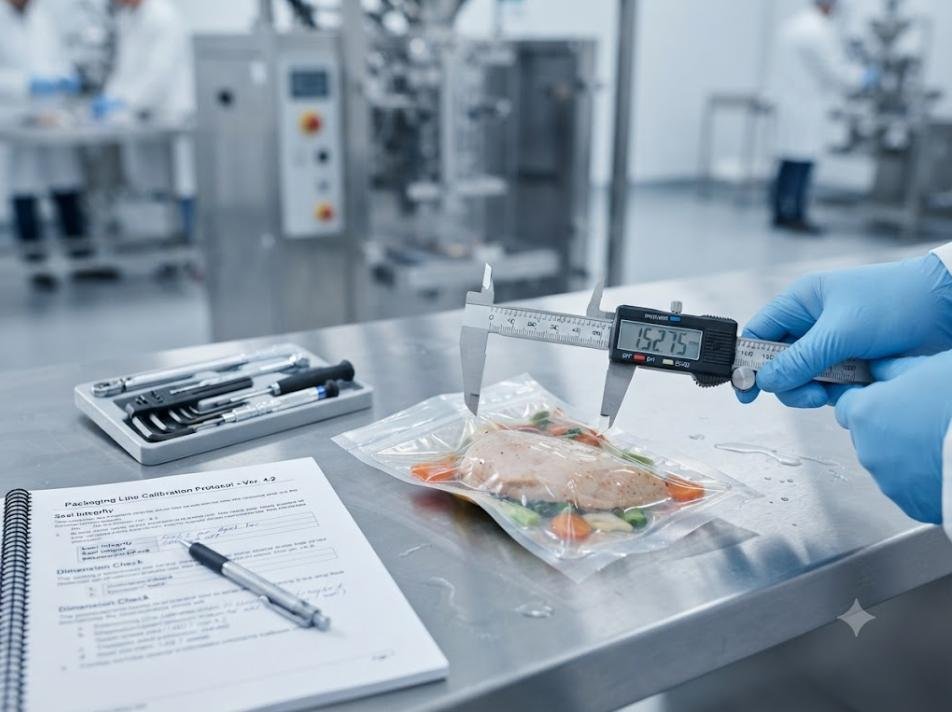
Food packaging machinery is precision equipment. Even small deviations in filling weight, seal temperature, or packaging speed can lead to serious problems—rejected batches, regulatory violations, and customer complaints.
Regular calibration is what keeps those variables in check. Yet many operators treat it as optional maintenance, not a critical process. Here’s why that’s a costly mistake.
What Calibration Actually Does
Calibration ensures that your packaging line’s sensors, controllers, and mechanical systems are performing to specification. This includes:
✓ Weight and volume accuracy (filling machines)
✓ Seal strength and temperature (heat sealers, bag closers)
✓ Speed and timing synchronization (conveyors, feeders, labelers)
✓ Sensor accuracy (metal detectors, vision systems, checkweighers)
Over time, wear, vibration, and environmental factors cause drift. A filling nozzle that dispensed exactly 500g three months ago might now dispense 485g—too small a difference to notice visually, but enough to trigger compliance issues or customer dissatisfaction.
The Real Costs of Skipping Calibration
- Product giveaway (overfilling)
If your filler drifts high, you’re giving away product in every package. On a line running 10,000 units per day, even a 2% overfill can cost thousands of dollars per month. - Underfill violations
Conversely, underfilling risks regulatory penalties. Many countries enforce strict net weight laws. Inspectors can fine you, recall product, or even shut down your line if random samples consistently fall short of the declared weight. - Seal failures
Improperly calibrated heat sealers cause weak seals that burst during transport, or overly hot seals that damage packaging film. Both lead to product waste and returns. - Downtime from cascading failures
When one part of the line drifts out of spec, it stresses downstream equipment. A mis-timed feeder can jam the cartoner. A misaligned labeler can trigger repeated stops. Calibration catches these issues before they escalate into breakdowns. - Failed audits
Food safety certifications (HACCP, BRC, FSSC 22000) require documented calibration schedules and records. Missing calibration logs can result in audit failures, lost certifications, and damaged customer relationships. How Often Should You Calibrate?
There’s no universal answer—it depends on your equipment, production volume, and regulatory requirements. But here are standard baselines:
Planning to buy this equipment? Tell us your capacity and budget — we reply within 24 hours.
Get a factory-direct quote on WhatsApp| Equipment Type | Recommended Frequency |
|---|---|
| Filling machines (weight/volume) | Every 1–3 months, or per 100,000 units |
| Heat sealers | Every 3–6 months |
| Checkweighers and metal detectors | Monthly (or per regulatory requirement) |
| Vision systems and sensors | Quarterly |
| Temperature controllers | Every 6 months |
High-volume or critical lines: Increase frequency. Some facilities calibrate fillers weekly.
In-House vs. Third-Party Calibration
In-house calibration works if you have:
- Trained technicians
- Calibrated reference standards (certified weights, thermometers, etc.)
- Documented procedures
Third-party calibration is essential when:
- Equipment is under warranty (some manufacturers require certified calibration)
- You need traceable certification for audits
- Your team lacks the training or tools
Many facilities use a hybrid approach: routine checks in-house, with annual third-party certification.
How to Build a Calibration Schedule
- List all critical equipment on your packaging line
- Check manufacturer recommendations for calibration intervals
- Review regulatory requirements for your product category and markets
- Set calendar reminders and assign responsibility
- Document everything: date, technician, results, adjustments made
Keep calibration logs in both digital and physical form. Auditors will ask for them.
Red Flags That Calibration Is Overdue
Even if you're on schedule, watch for these warning signs:
⚠️ Increasing product rejections or rework
⚠️ Customer complaints about weight, seal quality, or labeling
⚠️ Frequent line stoppages or jams
⚠️ Inconsistent output between shifts
⚠️ Failed spot-check weigh tests
If you see any of these, stop and calibrate immediately—don’t wait for the scheduled interval.
Need Help Setting Up or Sourcing Packaging Equipment?
At Zhenbao Trading, we supply food packaging machinery and can connect you with qualified service providers for installation, calibration, and maintenance. Whether you’re setting up a new line or optimizing an existing one, we’ll make sure you get equipment that’s reliable and easy to maintain.
Get in touch: sales@zhenbaotrading.com
WhatsApp: +852 9702 5284
Website: www.zhenbaotrading.com
Related Equipment
Need a price, spec sheet or a pre-shipment factory inspection? Message us directly.
Get a factory-direct quote on WhatsAppWhatsApp: +852 9702 5284 · +86 158 7238 6392