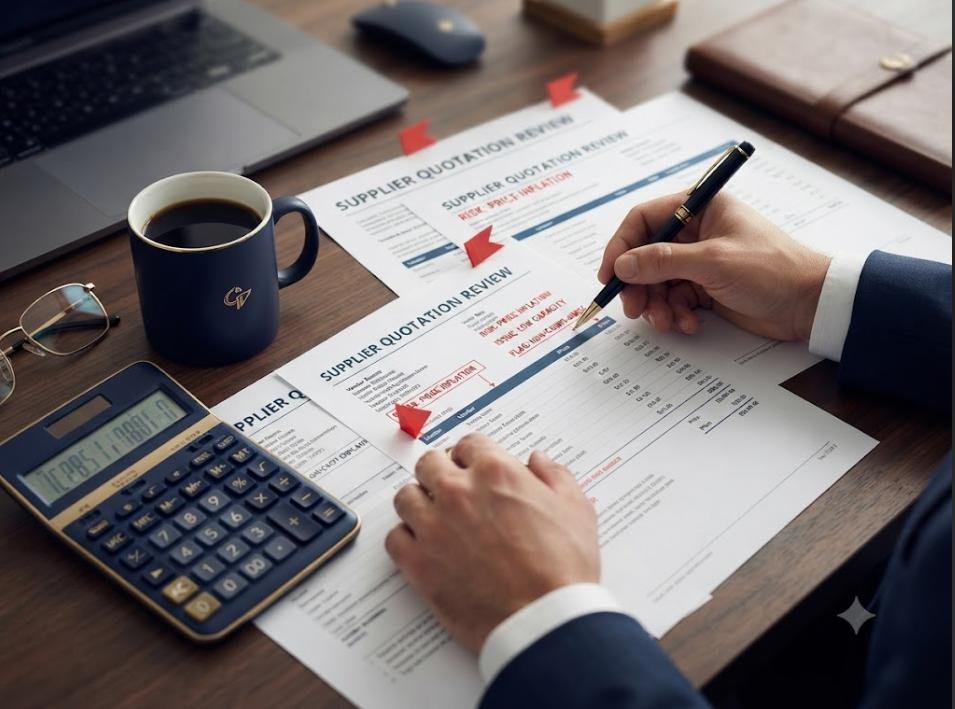
Sourcing from China can save you 30–50% on production costs, but only if you work with the right supplier.
I’ve been working on the supply side for five years, helping buyers navigate supplier selection, factory audits, and contract negotiations. And I’ve seen the same red flags appear over and over—often just before a buyer loses their deposit or receives a shipment that doesn’t match what they ordered.
Here are the five warning signs you should never ignore, and what to do when you spot them.
Red Flag 1: The Price Is Too Good to Be True
If one supplier quotes $2.50 per unit and everyone else is quoting $4.00–$4.80, don’t celebrate—investigate.
Why it's a red flag:
- They may be quoting for lower-quality materials or a different product spec
- They’re a trading company marking up another factory’s price, then undercutting to win your order (and disappearing later)
- They plan to deliver a cheaper substitute and hope you won’t notice
What to do:
Ask for a detailed cost breakdown: materials, labor, tooling, packaging, shipping. A legitimate supplier can explain where the savings come from. A suspicious one will dodge the question or give vague answers like “we have special relationships.”
Red Flag 2: They Push You to Pay Before Confirming All Details
A supplier who rushes you to pay a 30% deposit before finalizing the product spec, Pantone color, packaging design, or shipping terms is not trying to help you—they’re trying to lock in your money before you have time to think.
Why it’s a red flag:
Once you’ve paid, your leverage drops to zero. If the product doesn’t match your expectations, you’ll be stuck negotiating from a weak position—or you’ll lose the deposit entirely.
What to do:
Insist on a fully detailed Proforma Invoice (PI) and signed contract before paying anything. The PI should include:
- Exact product specifications (size, material, color codes, packaging)
- Lead time and delivery terms (FOB, CIF, DDP)
- Payment terms (30% deposit, 70% before shipment is standard)
- Quality standards and inspection procedures
If they refuse to put it in writing, walk away.
Red Flag 3: Their Factory Photos Look Too Perfect (or Too Vague)
Some suppliers send you gorgeous factory photos—clean floors, shiny machines, workers in branded uniforms. But when you reverse-image search the photo, it’s from another company’s website or a stock image library.
Planning to buy this equipment? Tell us your capacity and budget — we reply within 24 hours.
Get a factory-direct quote on WhatsAppOn the flip side, some suppliers send photos so blurry or generic that you can’t verify anything.
Why it’s a red flag:
If they don’t actually own or operate the factory, they can’t guarantee quality, lead times, or after-sales support. You’re dealing with a middleman who has no control over production.
What to do:
- Ask for a factory video tour showing your product being made (with a sign or message that proves it’s live, not stock footage)
- Request a third-party factory audit report (SGS, Bureau Veritas, Intertek)
- Visit the factory yourself, or hire a local agent to visit on your behalf Red Flag 4: Communication Suddenly Gets Worse After You Pay
Before you pay, they reply within hours. After you pay the deposit, responses slow down to 2–3 days—or they stop answering specific questions about production progress, shipping dates, or quality issues.
Why it’s a red flag:
This is a classic sign that your order is not their priority, or worse—they’ve taken on more orders than they can handle and are now scrambling.
What to do:
- Set clear communication expectations in your contract: weekly progress updates, photo/video confirmation at key milestones
- Use milestone-based payments instead of a single 30% deposit upfront (e.g., 10% to start, 20% at production midpoint, 70% before shipping)
- If communication drops off after payment, escalate immediately—don’t wait until the delivery deadline Red Flag 5: They Refuse Third-Party Quality Inspection
A legitimate supplier has nothing to hide. If they refuse to allow a third-party inspector (your own QC team or a hired inspection company) to check the goods before shipment, that’s a massive red flag.
Why it’s a red flag:
They know the product won’t pass inspection, or they’ve substituted cheaper materials, or they’re shipping a smaller quantity than you paid for.
What to do:
Make pre-shipment inspection (PSI) a non-negotiable part of your contract. You can hire inspectors from companies like SGS, Intertek, or QIMA for $200–$400 per inspection—cheap insurance compared to losing a $10,000+ order.
If the supplier refuses, don’t just accept it. Ask why. If they say “we guarantee quality ourselves,” that’s not good enough. Move to a supplier who welcomes transparency.
Bonus Tip: Get a Second Opinion Before You Pay
If you’re unsure whether a supplier, quotation, or contract is legitimate, get a second set of eyes on it—preferably someone who works on the supply side and knows what to look for.
We offer a $99 Supplier Risk Check service where we review your supplier’s quotation, Alibaba profile, PI, certificates, and contract for red flags within 24–48 hours. It’s a small upfront cost that can save you thousands in lost deposits or failed shipments.
What you send us:
- Supplier’s Alibaba link or contact details
- Quotation and Proforma Invoice
- Any contracts, certificates, or factory photos they’ve provided
What we check:
- Pricing vs. market benchmarks (is it realistic or suspiciously low?)
- Contract terms and payment structure (any hidden traps?)
- Factory verification (are they a real manufacturer or a trading company?)
- Common scam patterns we’ve seen before
If you’re about to send a deposit to a Chinese supplier and want peace of mind, reach out.
Maggie (岳海敏)
Zhenbao Trading | Machinery Sales & China Sourcing Agent
sales@zhenbaotrading.com
WhatsApp: +852 9702 5284
www.zhenbaotrading.com
Related Equipment
Need a price, spec sheet or a pre-shipment factory inspection? Message us directly.
Get a factory-direct quote on WhatsAppWhatsApp: +852 9702 5284 · +86 158 7238 6392